Food and the Gut-Brain Axis

Food does more than provide fuel. Diet is related to health, sleep and mood, but these relationships are complex. A meal is not a direct happiness control. This chapter distinguishes findings in people from possible explanations drawn from laboratory and animal research.
Serotonin, tryptophan, and the blood-brain barrier
RESEARCHED Serotonin (5-HT) is synthesized from the essential amino acid tryptophan via tryptophan hydroxylase. Crucial: about 90–95% of the body’s serotonin sits peripherally, produced by enterochromaffin cells in the gut wall (TPH1), where it regulates gut motility and secretion; the brain makes its own serotonin (TPH2) and does not use the peripheral supply, because 5-HT does not cross the blood-brain barrier. What does enter the brain is the precursor tryptophan, and it competes with other large neutral amino acids (LNAA) for the same transporter. Here sits the elegant carbohydrate effect (Wurtman & Wurtman): a carbohydrate-rich meal elicits insulin, which takes up the competing amino acids into muscle tissue but relatively spares tryptophan (largely albumin-bound), so the tryptophan/LNAA ratio rises and more tryptophan reaches the brain.
The causal evidence comes from acute tryptophan depletion (ATD): an amino-acid drink without tryptophan lowers plasma tryptophan within 5–7 hours by 70–90% and thereby central 5-HT synthesis. In recovered depression patients, and especially in those who are vulnerable or use SSRIs, ATD elicits a temporary mood dip (Delgado et al., 1990s; meta-analysis Ruhé et al., 2007). In healthy people without vulnerability the effect is small, which nuances the monoamine hypothesis: serotonin is a modulator within a vulnerable system, not an on/off switch for happiness.
The microbiome: from germ-free mice to psychobiotics
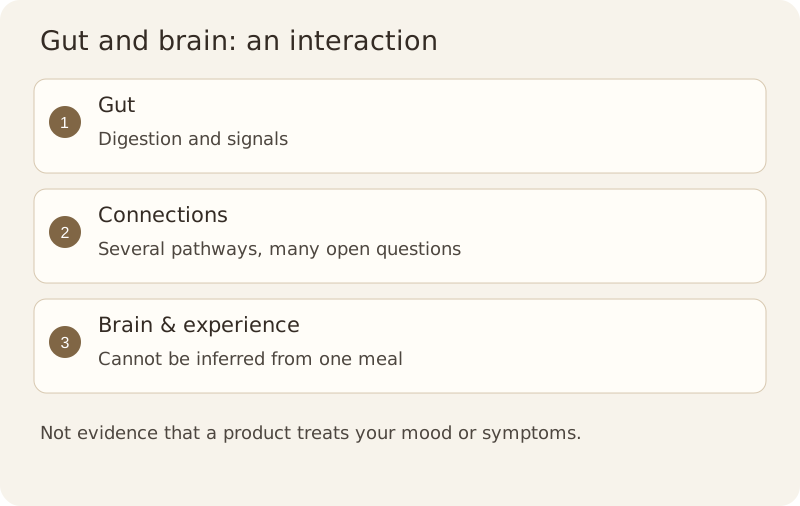
RESEARCHEDPROVISIONAL The evidence line begins with germ-free mice. Sudo et al. (Journal of Physiology, 2004) showed that mice without a microbiome display an exaggerated HPA stress response (cortisol/corticosterone), which normalizes after colonization, evidence that gut bacteria calibrate the stress axis. Bercik and Collins showed that transferring microbiota between mouse strains also relocates anxious/exploratory behavior. The mechanism is multiple: (1) microbial production of and influence on neuroactive substances (GABA, tryptophan metabolites); (2) short-chain fatty acids; (3) the vagus nerve; (4) immune modulation.
Short-chain fatty acids (SCFA: butyrate, propionate, acetate) arise from fiber fermentation. Erny et al. (Nature Neuroscience, 2015) showed that SCFAs drive the maturation and function of microglia, the immune cells of the brain; germ-free mice have malformed microglia that recover after SCFA administration. Butyrate is moreover a histone deacetylase inhibitor with effects on gene expression and BDNF.
Bravo and colleagues (2011) found effects of a particular bacterial strain in mice that disappeared after the vagus nerve was cut. That finding concerns a specific animal model and intervention. Small human studies, such as Tillisch (2013) and Steenbergen (2015), examine different outcomes. Together they do not show that any probiotic improves mood or treats depression. Effects may vary by strain, dose and person.
The blood-sugar roller coaster, with the data
RESEARCHED Mantantzis and colleagues’ review (2019) found no convincing evidence of a positive “sugar rush” and found more fatigue or less alertness at some points after carbohydrate intake. This does not mean every sugary meal causes hypoglycaemia or that feeling low proves a blood sugar problem. Recurrent shaking, fainting or severe dizziness should be assessed medically.
The inflammation route to depression
RESEARCHED Inflammatory processes may contribute to some depressive symptoms. Studies find raised inflammatory markers in some groups, and experimental immune activation can affect mood. Not everyone with depression has raised markers, and a marker does not explain a person’s symptoms by itself. The kynurenine pathway is one mechanism being studied, not a complete explanation of depression.
Dietary patterns are one of many factors researchers examine. The findings do not provide a simple list of foods that cause or resolve inflammation in everyone. Supplements are not an automatic treatment either; discuss them with a healthcare professional, particularly if you take medication.
The hard evidence: the SMILES trial and replications
RESEARCHED The SMILES study (Jacka et al., 2017) assigned 67 adults with depressive symptoms and poor diet quality to dietary support or social support. After twelve weeks, symptoms had improved more on average in the dietary group. Remission was reported in about 32% versus 8%, with considerable uncertainty because the groups were small. The trial did not directly compare diet with medication or establish equal effects. Many participants were already receiving other care. HELFIMED later studied a different combination, including Mediterranean-style food and fish oil; it was not an exact replication. Dietary support can complement care, not justify stopping treatment.
The old intuition, exactly weighed
PHILOSOPHY Yogic traditions use terms such as sattvic and tamasic to describe qualities of food and life. These are cultural and philosophical categories. They do not map directly onto modern nutrition research or establish a measurable food vibration. You can explore them without judging foods or yourself as pure or impure.
Practice, evidence-based
A practical starting point is regular meals and variety within your budget, health needs and preferences. A brief diary may reveal habits, but it cannot identify glycaemic or inflammatory triggers. Avoid exclusion diets based on a few mood changes. A doctor or dietitian can help with eating difficulties, persistent digestive symptoms or medical dietary needs.
In the next chapter we shift from internal chemistry to the bodily configuration itself, posture, face, and clothing, and we weigh honestly what the replication crisis has done with those claims.