Reader’s guide: research, assumptions and philosophy

This book brings research on mood and behaviour into conversation with philosophical questions about happiness. That can be useful when we distinguish measurements from interpretations. An old insight does not become scientifically proven because a brain scan appears to resemble it.
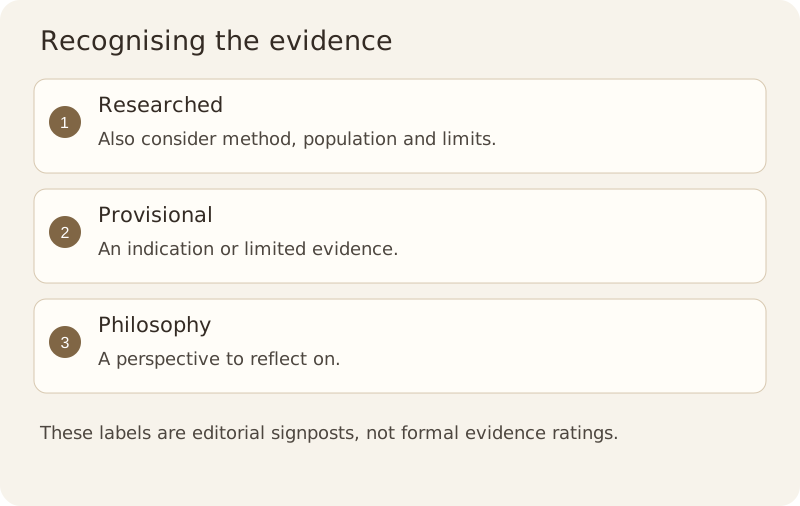
The colours help you read that distinction. They are not a seal of approval for an entire chapter. For each study, consider the participants, comparison and duration. A small experiment with healthy volunteers, for example, tells us little about treating depression.
RESEARCHED This claim has been studied empirically. The text describes findings and limitations. The label does not mean that an outcome applies to everyone, that every study has been replicated or that an association establishes a cause.
PROVISIONAL This is a tentative explanation, a disputed theory or a finding with limited supporting research. A convincing explanation can still turn out to be wrong.
PHILOSOPHY This is a philosophical idea, tradition or metaphor. You can consider whether it helps without accepting it as fact. Age, popularity and personal resonance are not evidence of effectiveness.
The Buddhist image of the second arrow, for instance, can help distinguish pain from our reaction to pain. The Default Mode Network is a concept from brain research. These accounts can inform a discussion, but they are not the same mechanism.
Frequency in the title sometimes refers to measurable rhythms, such as breathing, and sometimes to the tone of daily life. There is no single measurable frequency of happiness. We do not use the term to explain manifestation, attraction or influence over matter.
The exercises are invitations. Adapt them, skip them or stop if they feel uncomfortable. Persistent low mood, panic, trauma or difficulties with eating deserve professional support. This book is not treatment. In immediate danger, contact your local emergency service. In the Netherlands, call 112; for suicidal thoughts, 113 or 0800-0113 and the chat at 113.nl are available day and night.
Part I is available free. The course also includes the full book, with Part II on relationships, meaning and philosophy. Both editions use the same revised text.